Conferences need visible structure
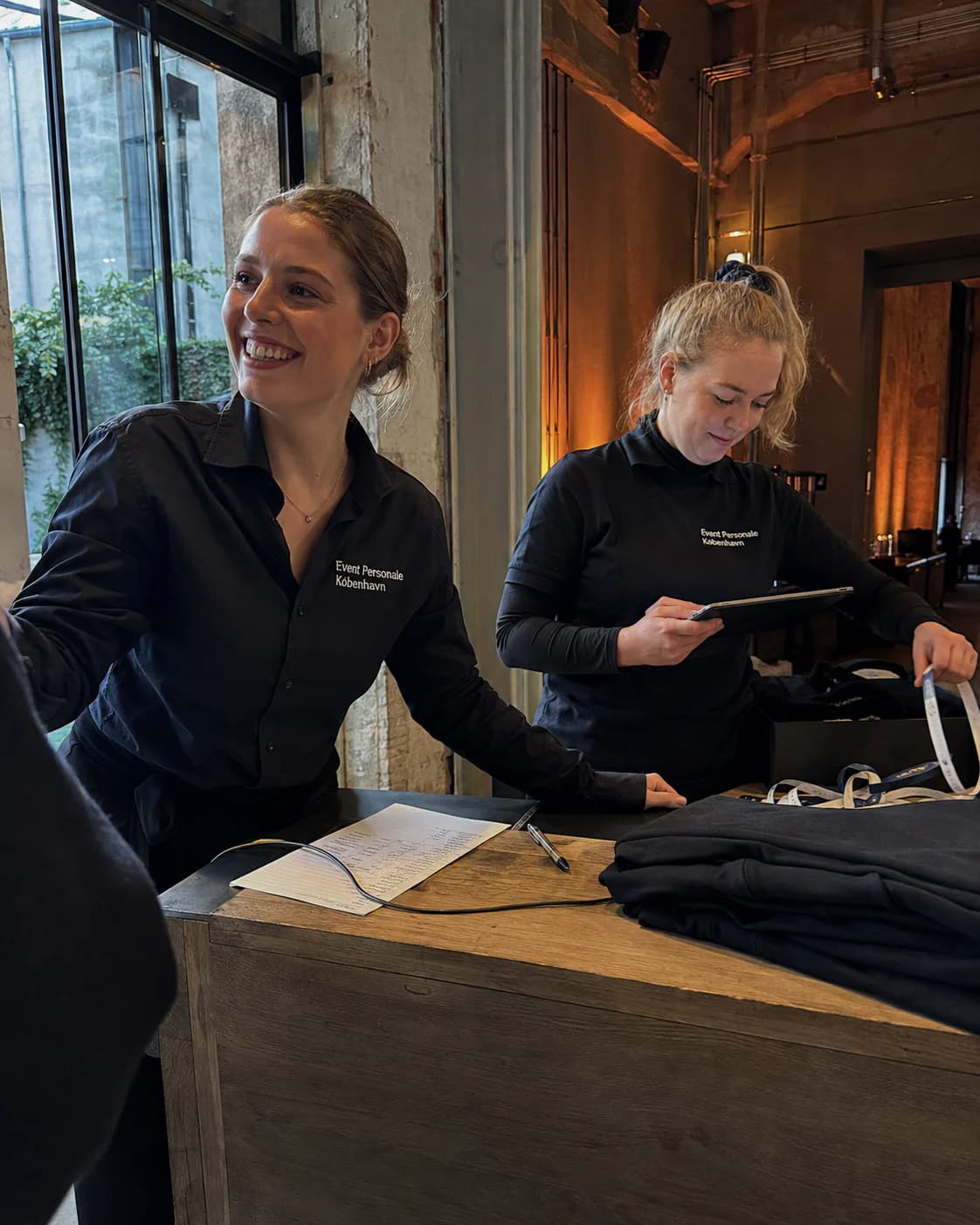
Registration, name badges, cloakroom, coffee, breakout rooms and lunch breaks should move without guests feeling the coordination behind them.
That requires staff who are both welcoming and precise. They need to answer practical questions while keeping the schedule on track.
Break the day into contact points
The key staffing points are usually arrival, first break, lunch, afternoon break and closing. Each point has a different pace.
When we plan conference staffing, we look at the programme rather than only the number of participants.
- Hosts at arrival
- Coffee and buffet staff
- Cloakroom and guest flow
International delegates need clear English
Many Copenhagen conferences welcome English-speaking guests. Staff should communicate clearly in English and explain venue, programme and practical details.
A good conference team gives the organiser space to focus on the content.
Plan for arrival waves, not just total attendance
An illustrative programme for a 120-person conference can be broken down below. These are tasks and periods, not a guarantee of a particular staffing count. Clarify queue capacity, badge systems and English-language service in the brief.
| Period | Task | Clarify before booking |
|---|---|---|
| 08:00–09:00 | Registration, cloakroom and welcome | How many arrive at once? Who resolves badge issues? |
| 10:30–11:00 | Break, coffee and clearing | Stations, replenishment and the kitchen return route. |
| 12:00–13:00 | Lunch and directions | Buffet or plated service? Dietary needs and staff breaks. |
| 16:00–17:00 | Cloakroom and closing | Handover, waste and final departures. |
Make your brief specific
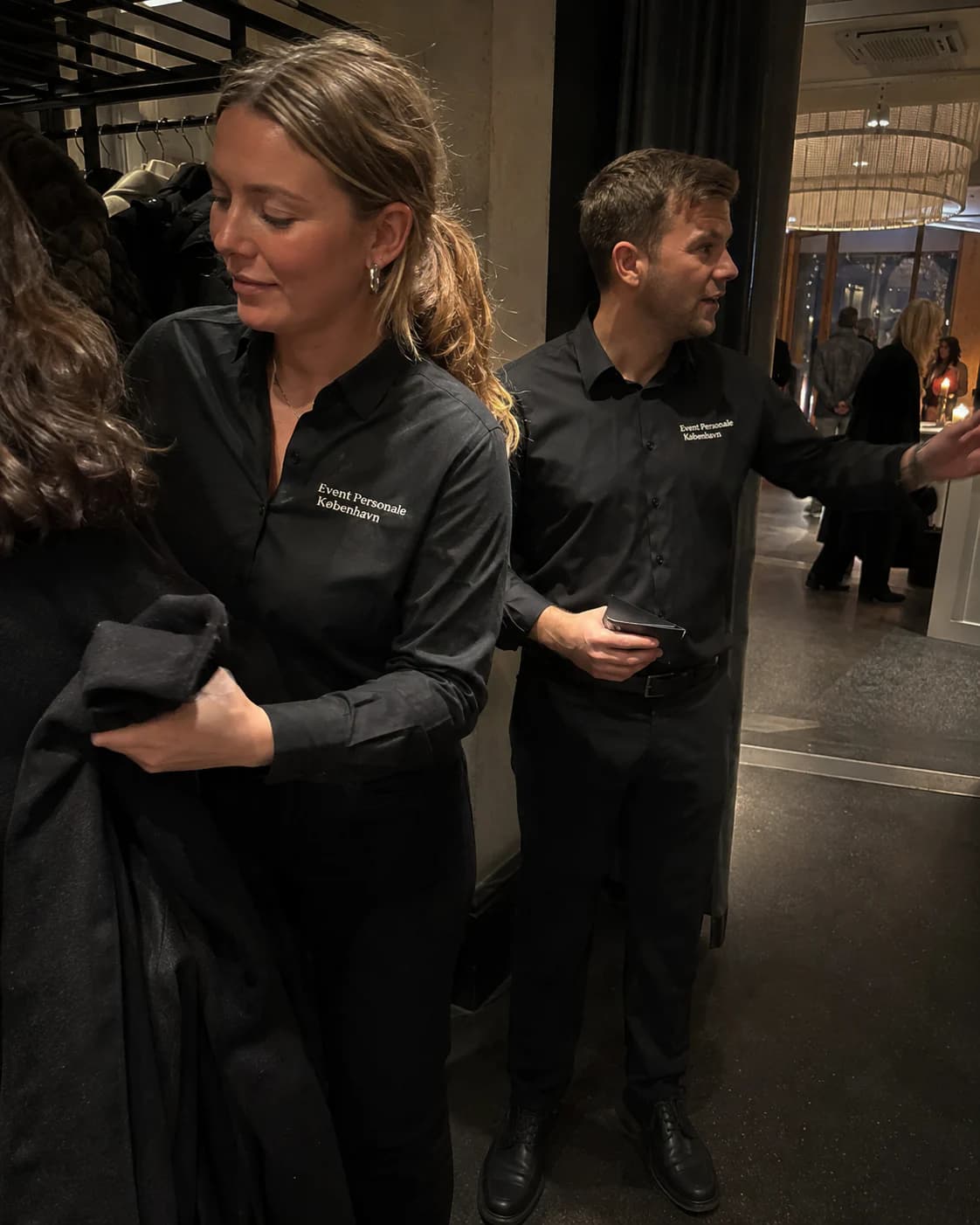
Write arrival, the main service periods and closing as separate tasks. Allocate responsibilities between venue, kitchen, organiser and staff; a waiter booking does not automatically include cooking or technical production. Choose your own roles and counts, or ask us to help clarify them.